Buy bezgrawitacji.eu ?
We are moving the project
bezgrawitacji.eu .
Are you interested in purchasing the domain
bezgrawitacji.eu ?
domain@kv-gmbh.de · 0541-91531010
Buy bezgrawitacji.eu ?
Is agave juice toxic?
Agave juice, also known as agave nectar or syrup, is not toxic when consumed in moderation. However, it is important to note that agave juice is high in fructose, which can have negative health effects when consumed in large amounts. Excessive consumption of agave juice can contribute to weight gain, insulin resistance, and other health issues. It is best to use agave juice sparingly and in moderation as part of a balanced diet. **
Is my agave still salvageable?
It's difficult to determine the salvageability of your agave without more information about its current condition. However, agaves are known for their resilience and ability to bounce back from damage. If the plant is showing signs of distress, such as wilting or discoloration, you can try to improve its care by ensuring it has proper sunlight, well-draining soil, and minimal watering. With the right care, there is a good chance that your agave can recover and thrive. **
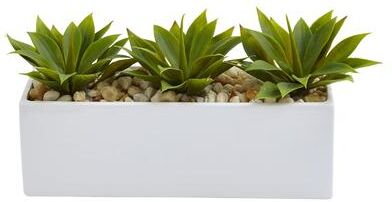

Similar search terms for Nearly-Natural-Agave-Succulent
Top-Angebote
Products related to Nearly-Natural-Agave-Succulent:
-
Nearly Natural "37"" Double Agave Succulent Artificial Plant in Slate Planter"Welcome a relaxed vibe with this artificial double agave succulent. Showcasing realistic looking leaves in natural coloration stemming from two sturdy trunks, it projects southwestern flair.134,88 $*Shipping: 0,00 $Secure redirect to the provider
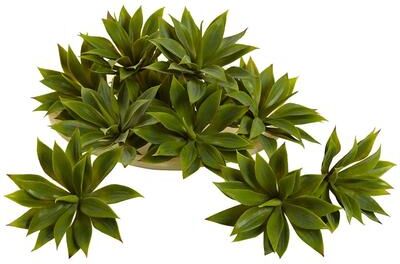

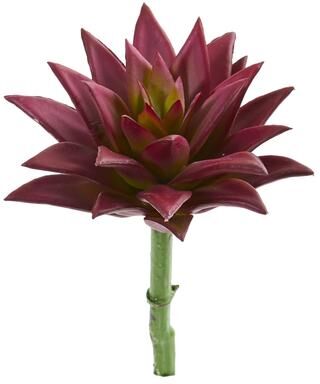
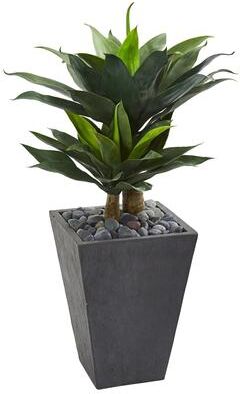
-
What is a succulent?
A succulent is a type of plant that stores water in its leaves, stems, or roots, allowing it to survive in arid environments. These plants are known for their thick, fleshy leaves and stems, as well as their ability to thrive with minimal water. Succulents come in a wide variety of shapes, sizes, and colors, making them popular choices for indoor and outdoor gardens. **
-
Are those succulent roots?
Yes, those are succulent roots. Succulent roots are typically thick, fleshy, and store water to help the plant survive in arid conditions. They are often found in plants that are adapted to dry environments, such as cacti and other desert plants. The succulent roots help the plant to efficiently absorb and store water, allowing them to thrive in harsh conditions. **
-
Does agave syrup taste better than honey?
The taste preference between agave syrup and honey is subjective and varies from person to person. Agave syrup is known for its mild, neutral flavor, while honey has a distinct sweet and floral taste. Some people may prefer the subtle sweetness of agave syrup, while others may enjoy the rich flavor of honey. Ultimately, the choice between the two comes down to personal preference and the specific dish or drink being prepared. **
-
What is a succulent disease?
A succulent disease is a condition that affects succulent plants, such as cacti and other water-storing plants. These diseases can be caused by various factors, including fungal infections, bacterial infections, pests, and environmental stress. Symptoms of succulent diseases may include discoloration, rotting, wilting, or unusual growth patterns. Proper care, such as providing adequate sunlight, well-draining soil, and avoiding overwatering, can help prevent succulent diseases. **


Will my succulent dry out?
Succulents are known for their ability to store water in their leaves, making them more tolerant to dry conditions. However, if a succulent is not watered for an extended period of time, it can dry out. It is important to monitor the soil moisture levels and water your succulent when the top inch of soil is dry to prevent it from drying out. Additionally, make sure your succulent is planted in well-draining soil and in a pot with drainage holes to avoid waterlogged conditions that can lead to root rot. **
Why is the succulent dying?
The succulent may be dying due to overwatering. Succulents are adapted to survive in dry conditions and do not require frequent watering. Overwatering can lead to root rot and ultimately kill the plant. Additionally, the succulent may not be receiving enough sunlight. Succulents need plenty of sunlight to thrive, so if it is not getting enough light, it may start to wilt and die. It's important to ensure that the succulent is in well-draining soil and placed in a sunny location to prevent it from dying. **
Top-Angebote
Products related to Nearly-Natural-Agave-Succulent:
-
Nearly Natural "29"" Double Agave Succulent Artificial Plant"Make your space green and full of life with this realistic-looking artificial succulent. Green leaves give the plant a lush, healthy look, while the plain black planter is simple and easy to match.106,99 $*Shipping: 0,00 $Secure redirect to the provider
-
Is agave juice toxic?
Agave juice, also known as agave nectar or syrup, is not toxic when consumed in moderation. However, it is important to note that agave juice is high in fructose, which can have negative health effects when consumed in large amounts. Excessive consumption of agave juice can contribute to weight gain, insulin resistance, and other health issues. It is best to use agave juice sparingly and in moderation as part of a balanced diet. **
-
Is my agave still salvageable?
It's difficult to determine the salvageability of your agave without more information about its current condition. However, agaves are known for their resilience and ability to bounce back from damage. If the plant is showing signs of distress, such as wilting or discoloration, you can try to improve its care by ensuring it has proper sunlight, well-draining soil, and minimal watering. With the right care, there is a good chance that your agave can recover and thrive. **
-
What is a succulent?
A succulent is a type of plant that stores water in its leaves, stems, or roots, allowing it to survive in arid environments. These plants are known for their thick, fleshy leaves and stems, as well as their ability to thrive with minimal water. Succulents come in a wide variety of shapes, sizes, and colors, making them popular choices for indoor and outdoor gardens. **
-
Are those succulent roots?
Yes, those are succulent roots. Succulent roots are typically thick, fleshy, and store water to help the plant survive in arid conditions. They are often found in plants that are adapted to dry environments, such as cacti and other desert plants. The succulent roots help the plant to efficiently absorb and store water, allowing them to thrive in harsh conditions. **
Similar search terms for Nearly-Natural-Agave-Succulent
-
Nearly Natural "37"" Double Agave Succulent Artificial Plant in Slate Planter"Welcome a relaxed vibe with this artificial double agave succulent. Showcasing realistic looking leaves in natural coloration stemming from two sturdy trunks, it projects southwestern flair.134,88 $*Shipping: 0,00 $Secure redirect to the provider
-
Nearly Natural "33"" Double Agave Succulent Artificial Plant in White Planter"Incorporate tropical accenting throughout your environment with this artificial double agave plant consisting of realistic looking leaves boasting naturally occurring details in bright, vivid hues.138,45 $*Shipping: 0,00 $Secure redirect to the provider
-
Does agave syrup taste better than honey?
The taste preference between agave syrup and honey is subjective and varies from person to person. Agave syrup is known for its mild, neutral flavor, while honey has a distinct sweet and floral taste. Some people may prefer the subtle sweetness of agave syrup, while others may enjoy the rich flavor of honey. Ultimately, the choice between the two comes down to personal preference and the specific dish or drink being prepared. **
-
What is a succulent disease?
A succulent disease is a condition that affects succulent plants, such as cacti and other water-storing plants. These diseases can be caused by various factors, including fungal infections, bacterial infections, pests, and environmental stress. Symptoms of succulent diseases may include discoloration, rotting, wilting, or unusual growth patterns. Proper care, such as providing adequate sunlight, well-draining soil, and avoiding overwatering, can help prevent succulent diseases. **
-
Will my succulent dry out?
Succulents are known for their ability to store water in their leaves, making them more tolerant to dry conditions. However, if a succulent is not watered for an extended period of time, it can dry out. It is important to monitor the soil moisture levels and water your succulent when the top inch of soil is dry to prevent it from drying out. Additionally, make sure your succulent is planted in well-draining soil and in a pot with drainage holes to avoid waterlogged conditions that can lead to root rot. **
-
Why is the succulent dying?
The succulent may be dying due to overwatering. Succulents are adapted to survive in dry conditions and do not require frequent watering. Overwatering can lead to root rot and ultimately kill the plant. Additionally, the succulent may not be receiving enough sunlight. Succulents need plenty of sunlight to thrive, so if it is not getting enough light, it may start to wilt and die. It's important to ensure that the succulent is in well-draining soil and placed in a sunny location to prevent it from dying. **
* All prices are inclusive of VAT and, if applicable, plus shipping costs. The offer information is based on the details provided by the respective shop and is updated through automated processes. Real-time updates do not occur, so deviations can occur in individual cases. ** Note: Parts of this content were created by AI.