Buy bezgrawitacji.eu ?
We are moving the project
bezgrawitacji.eu .
Are you interested in purchasing the domain
bezgrawitacji.eu ?
domain@kv-gmbh.de · 0541-91531010
Buy bezgrawitacji.eu ?
What are orchestral arrangements?
Orchestral arrangements refer to the musical composition and organization of a piece of music for an orchestra. This involves determining which instruments will play which parts, as well as the overall structure and dynamics of the piece. Orchestral arrangements can involve adapting a piece of music originally written for a different ensemble or creating a new arrangement of an existing composition. The goal of orchestral arrangements is to showcase the unique timbres and capabilities of the various instruments in the orchestra while creating a cohesive and expressive musical performance. **
What is an orchestral musician?
An orchestral musician is a professional musician who plays a musical instrument as part of an orchestra. They are highly skilled in their instrument and are able to perform a wide range of musical styles and genres. Orchestral musicians work together with other musicians in the orchestra to create a cohesive and harmonious sound, following the direction of a conductor. They often perform in concert halls, theaters, and other venues, bringing music to audiences around the world. **

Similar search terms for Orchestral
Top-Angebote
Products related to Orchestral:
-
eclife 16.2ft Space Adventure Bounce House with Splash Pool Indoor/OutdoorBlast off into hours of active, screen‑free play with this space‑themed inflatable bounce house and water slide combo. Designed to spark young imaginations, its rocket, satellite, and spacecraft details turn any backyard into a mission control for fun.492,49 $*Shipping: 0,00 $Secure redirect to the provider
-
Multisell Products Hub High Tech Construction Bricks Set, New Creative Technology Space Station Transparent Globe, Toy Gifts For Children High Tech Construction Bricks Set, New Creative Technology Space Station Transparent Globe, Toy Gifts For ChildrenInnovative Building Fun for Kids: Bring the world of construction and creativity together with the New Creative Technology Space Station Transparent Globe Building Blocks. This hightech, engaging toy set is designed for young minds to explore the...179,97 $*Shipping: 0,00 $Secure redirect to the provider
-
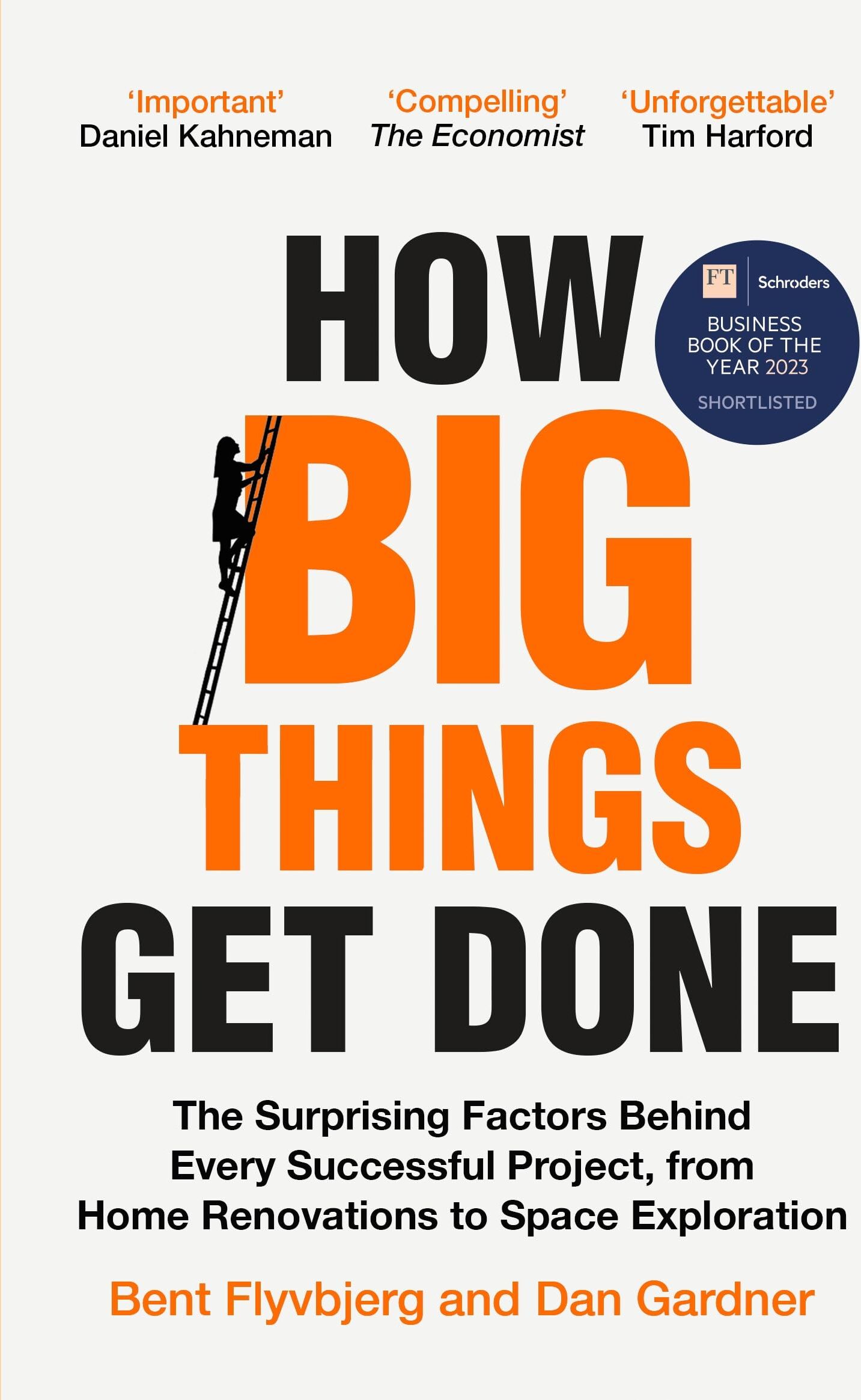
Macmillan Business How Big Things Get Done: The Surprising Factors Behind Every Successful Project, from Home Renovations to Space ExplorationHow Big Things Get Done: The Surprising Factors Behind Every Successful Project, from Home Renovations to Space Exploration Nothing is more inspiring than a big vision that becomes a triumphant new reality. Think of how Apple’s iPod went from a project with a single employee to an enormously successful product launch in eleven months. But such successes are the exception. Consider how London’s Crossrail project delivered five years late and billions over budget. More modest endeavours, whether launching a small business, organizing a conference, or just finishing a work project on time, also commonly fail. Why? Understanding what distinguishes the triumphs from the failures has been the life’s work of Oxford professor Bent Flyvbjerg. In How Big Things Get Done, he identifies the errors that lead projects to fail, and the research-based principles that will make yours succeed: Understand your odds. If you don’t know them, you won’t win. Plan slow, act fast. Getting to the action quick feels right. But it’s wrong. Think right to left. Start with your goal, then identify the steps to get there. Find your Lego. Big is best built from small. Master the unknown unknowns. Most think they can’t, so they fail. Flyvbjerg shows how you can. Full of vivid examples ranging from the building of the Sydney Opera House to the making of the latest Pixar blockbusters, How Big Things Get Done reveals how to get any ambitious project done – on time and on budget.2,99 £*Shipping: 1,99 £Secure redirect to the provider
-
HARPERCOLLINS Creative Confidence by Tom & David Kelley – Unleashing Your Creative Potential & Innovation MindsetA powerful and inspiring book from the founders of IDEO, the award-winning design firm, on unleashing the creativity that lies within each and every one of us. Too often, companies and individuals assume that creativity and innovation are the domain of the ‘creative types’. But two of the foremost experts in innovation, design and creativity on the planet show us that each and every one of us is creative. In an entertaining and inspiring narrative that draws on countless stories from their work at IDEO, and with many of the world's top companies and design firms, David and Tom Kelley identify the principles and strategies that will allow us to tap into our creative potential in our work lives, and in our personal lives, allow us to think outside the box in terms of how we approach and solve problems. ‘Creative Confidence’ is a book that will help each of us be more productive and successful in our lives and in our careers.4,95 £*Shipping: 1,99 £Secure redirect to the provider



-
What are orchestral cyclic large forms?
Orchestral cyclic large forms are musical compositions that consist of multiple movements or sections that are thematically related and interconnected. These forms often feature recurring motifs or themes that unify the different parts of the composition. The cyclic nature of these forms allows for a sense of cohesion and continuity throughout the entire piece. Examples of orchestral cyclic large forms include symphonies, concertos, and tone poems. **
-
How can one compose virtual orchestral music?
To compose virtual orchestral music, one can start by choosing a digital audio workstation (DAW) software that supports orchestral sample libraries. Next, select high-quality orchestral sample libraries that include a variety of instruments such as strings, brass, woodwinds, and percussion. Then, familiarize oneself with the different articulations and techniques available for each instrument to create realistic and expressive performances. Finally, arrange the orchestral parts, paying attention to dynamics, phrasing, and balance to achieve a cohesive and emotive composition. **
-
How can one compose orchestral digital music?
To compose orchestral digital music, one can start by selecting a digital audio workstation (DAW) software that supports orchestral sounds and instruments. Next, they can choose high-quality orchestral sample libraries or virtual instruments to create realistic orchestral sounds. It is important to have a good understanding of orchestration and music theory to effectively arrange the different instruments in the composition. Experimenting with different combinations of instruments, melodies, harmonies, and rhythms can help in creating a dynamic and engaging orchestral piece. **
-
What is the orchestral instrumentation in classical music?
Orchestral instrumentation in classical music typically includes four main families of instruments: strings (violins, violas, cellos, double basses), woodwinds (flutes, oboes, clarinets, bassoons), brass (trumpets, French horns, trombones, tuba), and percussion (timpani, snare drum, cymbals). Each family of instruments plays a unique role in creating the rich and diverse sound of the orchestra. The combination of these instruments allows composers to create a wide range of textures and dynamics in their compositions, making orchestral music one of the most versatile and expressive forms of music. **


What is the orchestral lineup in classical music?
The orchestral lineup in classical music typically consists of four main sections: strings, woodwinds, brass, and percussion. Each section is made up of various instruments, with the strings section including instruments such as violins, violas, cellos, and double basses; the woodwinds section including instruments like flutes, clarinets, oboes, and bassoons; the brass section including instruments like trumpets, trombones, French horns, and tubas; and the percussion section including instruments like timpani, snare drums, cymbals, and xylophones. Additionally, some orchestras may also include other instruments such as harps, keyboards, and additional percussion instruments. **
Can you please give a presentation about orchestral instruments?
Orchestral instruments are divided into four main families: strings, woodwinds, brass, and percussion. String instruments include the violin, viola, cello, and double bass, which produce sound by vibrating strings. Woodwind instruments, such as the flute, clarinet, and oboe, create sound by blowing air through a mouthpiece. Brass instruments like the trumpet, trombone, and French horn produce sound by buzzing lips into a mouthpiece. Percussion instruments, including the timpani, snare drum, and cymbals, produce sound by being struck or shaken. Each family of instruments plays a unique role in an orchestra, coming together to create a harmonious and dynamic musical experience. **
Top-Angebote
Products related to Orchestral:
-
Rockburn RockJam Adjustable Orchestral Sheet Music StandThe deluxe orchsetral sheet music stand is a high quality, robust and sturdy stand fit for all purposes and playing positions. It features a large 475mm x 345mm book plate which can be angled, while its strurdy tripod base offers a confident stance wherever placed. Large 475mm x 345mm book plate with fully adjustable angle. Matt black finsh. Fully adjustable from 940mm to 1420mm (from floor to top). Model g905. Batteries (not included). Suitable for suitable for all sheet music. Size H61.5, W36.5, D12.5cm....38,49 £*Shipping: 0,00 £Secure redirect to the provider
-
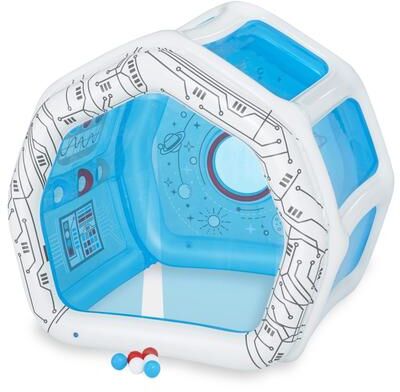
Bestway Space Station Exploration Kids Inflatable Playhouse - MultiDevelops: -Gross Motor Skills: stimulates your child's ability to get up and move around, gaining control of their bodies and movement - Imagination: encourages your child to dream of new ways to see the world around them - Confidence & Communication:…52,99 $*Shipping: 0,00 $Secure redirect to the provider
-
eclife 16.2ft Space Adventure Bounce House with Splash Pool Indoor/OutdoorBlast off into hours of active, screen‑free play with this space‑themed inflatable bounce house and water slide combo. Designed to spark young imaginations, its rocket, satellite, and spacecraft details turn any backyard into a mission control for fun.492,49 $*Shipping: 0,00 $Secure redirect to the provider
-
Multisell Products Hub High Tech Construction Bricks Set, New Creative Technology Space Station Transparent Globe, Toy Gifts For Children High Tech Construction Bricks Set, New Creative Technology Space Station Transparent Globe, Toy Gifts For ChildrenInnovative Building Fun for Kids: Bring the world of construction and creativity together with the New Creative Technology Space Station Transparent Globe Building Blocks. This hightech, engaging toy set is designed for young minds to explore the...179,97 $*Shipping: 0,00 $Secure redirect to the provider
-
What are orchestral arrangements?
Orchestral arrangements refer to the musical composition and organization of a piece of music for an orchestra. This involves determining which instruments will play which parts, as well as the overall structure and dynamics of the piece. Orchestral arrangements can involve adapting a piece of music originally written for a different ensemble or creating a new arrangement of an existing composition. The goal of orchestral arrangements is to showcase the unique timbres and capabilities of the various instruments in the orchestra while creating a cohesive and expressive musical performance. **
-
What is an orchestral musician?
An orchestral musician is a professional musician who plays a musical instrument as part of an orchestra. They are highly skilled in their instrument and are able to perform a wide range of musical styles and genres. Orchestral musicians work together with other musicians in the orchestra to create a cohesive and harmonious sound, following the direction of a conductor. They often perform in concert halls, theaters, and other venues, bringing music to audiences around the world. **
-
What are orchestral cyclic large forms?
Orchestral cyclic large forms are musical compositions that consist of multiple movements or sections that are thematically related and interconnected. These forms often feature recurring motifs or themes that unify the different parts of the composition. The cyclic nature of these forms allows for a sense of cohesion and continuity throughout the entire piece. Examples of orchestral cyclic large forms include symphonies, concertos, and tone poems. **
-
How can one compose virtual orchestral music?
To compose virtual orchestral music, one can start by choosing a digital audio workstation (DAW) software that supports orchestral sample libraries. Next, select high-quality orchestral sample libraries that include a variety of instruments such as strings, brass, woodwinds, and percussion. Then, familiarize oneself with the different articulations and techniques available for each instrument to create realistic and expressive performances. Finally, arrange the orchestral parts, paying attention to dynamics, phrasing, and balance to achieve a cohesive and emotive composition. **
Similar search terms for Orchestral
-
Macmillan Business How Big Things Get Done: The Surprising Factors Behind Every Successful Project, from Home Renovations to Space ExplorationHow Big Things Get Done: The Surprising Factors Behind Every Successful Project, from Home Renovations to Space Exploration Nothing is more inspiring than a big vision that becomes a triumphant new reality. Think of how Apple’s iPod went from a project with a single employee to an enormously successful product launch in eleven months. But such successes are the exception. Consider how London’s Crossrail project delivered five years late and billions over budget. More modest endeavours, whether launching a small business, organizing a conference, or just finishing a work project on time, also commonly fail. Why? Understanding what distinguishes the triumphs from the failures has been the life’s work of Oxford professor Bent Flyvbjerg. In How Big Things Get Done, he identifies the errors that lead projects to fail, and the research-based principles that will make yours succeed: Understand your odds. If you don’t know them, you won’t win. Plan slow, act fast. Getting to the action quick feels right. But it’s wrong. Think right to left. Start with your goal, then identify the steps to get there. Find your Lego. Big is best built from small. Master the unknown unknowns. Most think they can’t, so they fail. Flyvbjerg shows how you can. Full of vivid examples ranging from the building of the Sydney Opera House to the making of the latest Pixar blockbusters, How Big Things Get Done reveals how to get any ambitious project done – on time and on budget.2,99 £*Shipping: 1,99 £Secure redirect to the provider
-
HARPERCOLLINS Creative Confidence by Tom & David Kelley – Unleashing Your Creative Potential & Innovation MindsetA powerful and inspiring book from the founders of IDEO, the award-winning design firm, on unleashing the creativity that lies within each and every one of us. Too often, companies and individuals assume that creativity and innovation are the domain of the ‘creative types’. But two of the foremost experts in innovation, design and creativity on the planet show us that each and every one of us is creative. In an entertaining and inspiring narrative that draws on countless stories from their work at IDEO, and with many of the world's top companies and design firms, David and Tom Kelley identify the principles and strategies that will allow us to tap into our creative potential in our work lives, and in our personal lives, allow us to think outside the box in terms of how we approach and solve problems. ‘Creative Confidence’ is a book that will help each of us be more productive and successful in our lives and in our careers.4,95 £*Shipping: 1,99 £Secure redirect to the provider
-
JoyToys Interactive Dancing Duck Toy With Music, Lights & Space Adventure For Babies And Toddlers pandaEnjoy endless smiles and early learning with this musical baby toy that keeps little ones happily engaged through movement, lights, and cheerful sounds. Designed for babies and toddlers, this adorable duck features a fun spaceinspired design that...55,97 $*Shipping: 0,00 $Secure redirect to the provider
-
Phaidon Press Our Galaxy: A First Adventure in Space (Our World Collection) by Sue Lowell GallionA stunning addition to the bestselling Our World Collection, this colorful, creative picture book transforms into a freestanding globe. Explore our galactic home with this charming read-aloud introduction to astronomy. Beautifully illustrated and cleverly designed, Our Galaxy opens and folds back into a sturdy circular globe fastened by a hidden magnetic closure. Rhyming verse and lush illustrations teach young children about astronomical objects – from the planets in our solar neighborhood to faraway stars in the Milky Way. Secondary text offers more detailed, curriculum-focused facts and encourages children to learn about rockets, rovers, and other space technologies. Inspiring, informative, and one-of-a-kind, this artful homage to outer space is both an invitation to explore the night sky and an object to be treasured for years to come.9,99 £*Shipping: 2,99 £Secure redirect to the provider
-
How can one compose orchestral digital music?
To compose orchestral digital music, one can start by selecting a digital audio workstation (DAW) software that supports orchestral sounds and instruments. Next, they can choose high-quality orchestral sample libraries or virtual instruments to create realistic orchestral sounds. It is important to have a good understanding of orchestration and music theory to effectively arrange the different instruments in the composition. Experimenting with different combinations of instruments, melodies, harmonies, and rhythms can help in creating a dynamic and engaging orchestral piece. **
-
What is the orchestral instrumentation in classical music?
Orchestral instrumentation in classical music typically includes four main families of instruments: strings (violins, violas, cellos, double basses), woodwinds (flutes, oboes, clarinets, bassoons), brass (trumpets, French horns, trombones, tuba), and percussion (timpani, snare drum, cymbals). Each family of instruments plays a unique role in creating the rich and diverse sound of the orchestra. The combination of these instruments allows composers to create a wide range of textures and dynamics in their compositions, making orchestral music one of the most versatile and expressive forms of music. **
-
What is the orchestral lineup in classical music?
The orchestral lineup in classical music typically consists of four main sections: strings, woodwinds, brass, and percussion. Each section is made up of various instruments, with the strings section including instruments such as violins, violas, cellos, and double basses; the woodwinds section including instruments like flutes, clarinets, oboes, and bassoons; the brass section including instruments like trumpets, trombones, French horns, and tubas; and the percussion section including instruments like timpani, snare drums, cymbals, and xylophones. Additionally, some orchestras may also include other instruments such as harps, keyboards, and additional percussion instruments. **
-
Can you please give a presentation about orchestral instruments?
Orchestral instruments are divided into four main families: strings, woodwinds, brass, and percussion. String instruments include the violin, viola, cello, and double bass, which produce sound by vibrating strings. Woodwind instruments, such as the flute, clarinet, and oboe, create sound by blowing air through a mouthpiece. Brass instruments like the trumpet, trombone, and French horn produce sound by buzzing lips into a mouthpiece. Percussion instruments, including the timpani, snare drum, and cymbals, produce sound by being struck or shaken. Each family of instruments plays a unique role in an orchestra, coming together to create a harmonious and dynamic musical experience. **
* All prices are inclusive of VAT and, if applicable, plus shipping costs. The offer information is based on the details provided by the respective shop and is updated through automated processes. Real-time updates do not occur, so deviations can occur in individual cases. ** Note: Parts of this content were created by AI.