Buy bezgrawitacji.eu ?
We are moving the project
bezgrawitacji.eu .
Are you interested in purchasing the domain
bezgrawitacji.eu ?
domain@kv-gmbh.de · 0541-91531010
Buy bezgrawitacji.eu ?
Why are there transverse waves?
Transverse waves occur because of the perpendicular motion of the medium particles to the direction of the wave. When a disturbance or energy is transmitted through a medium, the particles of the medium move perpendicular to the direction of the wave, causing the wave to propagate in a transverse manner. This type of wave motion is commonly observed in phenomena such as light, electromagnetic waves, and seismic waves. Transverse waves are essential for the transmission of energy and information through various mediums. **
What is a transverse flute?
A transverse flute is a musical instrument that is played by blowing air across a hole in the mouthpiece, causing the air to vibrate and produce sound. It is typically made of metal or wood and has a long, narrow body with keys or holes along its length to change the pitch of the notes. The player holds the flute horizontally and blows air into the mouthpiece while using their fingers to cover and uncover the holes to produce different notes. The transverse flute is commonly used in classical, jazz, and folk music. **


Similar search terms for Transverse
Top-Angebote
Products related to Transverse:
-
Harlequin Transverse 10.05m x 68.6cm Wallpaper Roll Marble 1,005cm LInky brush mark detail casts subtle shapes and shadows across the ground of this showstopping wide-width wallpaper that`s inspired by the angularity of architecture. Harlequin Colour: Marble87,99 £*Shipping: 0,00 £Secure redirect to the provider
-
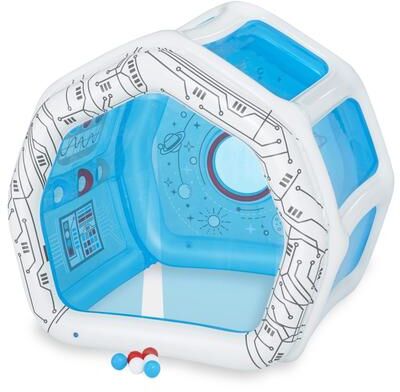
Bestway Space Station Exploration Kids Inflatable Playhouse - MultiDevelops: -Gross Motor Skills: stimulates your child's ability to get up and move around, gaining control of their bodies and movement - Imagination: encourages your child to dream of new ways to see the world around them - Confidence & Communication:…52,99 $*Shipping: 0,00 $Secure redirect to the provider
-
eclife 16.2ft Space Adventure Bounce House with Splash Pool Indoor/OutdoorBlast off into hours of active, screen‑free play with this space‑themed inflatable bounce house and water slide combo. Designed to spark young imaginations, its rocket, satellite, and spacecraft details turn any backyard into a mission control for fun.497,29 $*Shipping: 0,00 $Secure redirect to the provider
-
Multisell Products Hub High Tech Construction Bricks Set, New Creative Technology Space Station Transparent Globe, Toy Gifts For Children High Tech Construction Bricks Set, New Creative Technology Space Station Transparent Globe, Toy Gifts For ChildrenInnovative Building Fun for Kids: Bring the world of construction and creativity together with the New Creative Technology Space Station Transparent Globe Building Blocks. This hightech, engaging toy set is designed for young minds to explore the...179,97 $*Shipping: 0,00 $Secure redirect to the provider



-
What is a transverse shaft?
A transverse shaft is a type of shaft that runs perpendicular to the direction of the main shaft or axis. It is commonly used in vehicles with front-wheel drive systems to transfer power from the engine to the front wheels. The transverse shaft helps distribute power evenly to the wheels, allowing for better traction and handling. This design is often used in compact cars and other vehicles where space is limited. **
-
What is a transverse shaft cable?
A transverse shaft cable is a type of cable used in mechanical systems to transmit power or motion between two points that are not in line with each other. It typically consists of a flexible shaft enclosed in a protective casing, allowing it to bend and transmit power around corners or obstacles. Transverse shaft cables are commonly used in applications such as steering systems in vehicles, remote control mechanisms, and industrial machinery where a straight-line connection is not possible. **
-
Do transverse waves only occur in solids?
No, transverse waves can occur in solids, liquids, and gases. Transverse waves are characterized by the particles of the medium moving perpendicular to the direction of the wave. This type of wave motion can be observed in various mediums, not just solids. Examples of transverse waves in different mediums include water waves (liquid), seismic S-waves (solid), and electromagnetic waves (can travel through vacuum). **
-
What is light as a transverse wave?
Light as a transverse wave means that the oscillations of the light wave occur perpendicular to the direction of its propagation. This means that as the light wave travels, the electric and magnetic fields oscillate in a direction perpendicular to the direction of the wave's movement. This characteristic of light as a transverse wave is important in understanding its behavior and interactions with matter, as well as in the study of optics and electromagnetic phenomena. **


Does this bamboo transverse flute, bamboo flute, work the same way as the transverse flute as we know it?
No, the bamboo transverse flute works differently from the transverse flute as we know it. While both instruments are played by blowing air across a hole to create sound, the construction and mechanics of the bamboo transverse flute are different. The bamboo transverse flute is made from bamboo and has a unique embouchure hole and finger hole placement, which affects the sound and playing technique. Additionally, the bamboo transverse flute may have a different scale and tuning compared to the traditional transverse flute. **
Is a transverse wave also a longitudinal wave?
No, a transverse wave is not the same as a longitudinal wave. Transverse waves have oscillations perpendicular to the direction of wave propagation, while longitudinal waves have oscillations parallel to the direction of wave propagation. This means that the particles in a transverse wave move up and down or side to side, while the particles in a longitudinal wave move back and forth in the same direction as the wave. **
Top-Angebote
Products related to Transverse:
-
Harlequin Transverse 10.05m x 68.6cm Wallpaper Roll Ink 1,005cm LInky brush mark detail casts subtle shapes and shadows across the ground of this showstopping wide-width wallpaper that`s inspired by the angularity of architecture. Harlequin Colour: Ink85,00 £*Shipping: 0,00 £Secure redirect to the provider
-
Harlequin Transverse 10.05m x 68.6cm Wallpaper Roll Bronze 1,005cm LInky brush mark detail casts subtle shapes and shadows across the ground of this showstopping wide-width wallpaper that`s inspired by the angularity of architecture. Harlequin Colour: Bronze90,00 £*Shipping: 0,00 £Secure redirect to the provider
-
Harlequin Transverse 10.05m x 68.6cm Wallpaper Roll Marble 1,005cm LInky brush mark detail casts subtle shapes and shadows across the ground of this showstopping wide-width wallpaper that`s inspired by the angularity of architecture. Harlequin Colour: Marble87,99 £*Shipping: 0,00 £Secure redirect to the provider
-
Bestway Space Station Exploration Kids Inflatable Playhouse - MultiDevelops: -Gross Motor Skills: stimulates your child's ability to get up and move around, gaining control of their bodies and movement - Imagination: encourages your child to dream of new ways to see the world around them - Confidence & Communication:…52,99 $*Shipping: 0,00 $Secure redirect to the provider
-
Why are there transverse waves?
Transverse waves occur because of the perpendicular motion of the medium particles to the direction of the wave. When a disturbance or energy is transmitted through a medium, the particles of the medium move perpendicular to the direction of the wave, causing the wave to propagate in a transverse manner. This type of wave motion is commonly observed in phenomena such as light, electromagnetic waves, and seismic waves. Transverse waves are essential for the transmission of energy and information through various mediums. **
-
What is a transverse flute?
A transverse flute is a musical instrument that is played by blowing air across a hole in the mouthpiece, causing the air to vibrate and produce sound. It is typically made of metal or wood and has a long, narrow body with keys or holes along its length to change the pitch of the notes. The player holds the flute horizontally and blows air into the mouthpiece while using their fingers to cover and uncover the holes to produce different notes. The transverse flute is commonly used in classical, jazz, and folk music. **
-
What is a transverse shaft?
A transverse shaft is a type of shaft that runs perpendicular to the direction of the main shaft or axis. It is commonly used in vehicles with front-wheel drive systems to transfer power from the engine to the front wheels. The transverse shaft helps distribute power evenly to the wheels, allowing for better traction and handling. This design is often used in compact cars and other vehicles where space is limited. **
-
What is a transverse shaft cable?
A transverse shaft cable is a type of cable used in mechanical systems to transmit power or motion between two points that are not in line with each other. It typically consists of a flexible shaft enclosed in a protective casing, allowing it to bend and transmit power around corners or obstacles. Transverse shaft cables are commonly used in applications such as steering systems in vehicles, remote control mechanisms, and industrial machinery where a straight-line connection is not possible. **
Similar search terms for Transverse
-
eclife 16.2ft Space Adventure Bounce House with Splash Pool Indoor/OutdoorBlast off into hours of active, screen‑free play with this space‑themed inflatable bounce house and water slide combo. Designed to spark young imaginations, its rocket, satellite, and spacecraft details turn any backyard into a mission control for fun.497,29 $*Shipping: 0,00 $Secure redirect to the provider
-
Multisell Products Hub High Tech Construction Bricks Set, New Creative Technology Space Station Transparent Globe, Toy Gifts For Children High Tech Construction Bricks Set, New Creative Technology Space Station Transparent Globe, Toy Gifts For ChildrenInnovative Building Fun for Kids: Bring the world of construction and creativity together with the New Creative Technology Space Station Transparent Globe Building Blocks. This hightech, engaging toy set is designed for young minds to explore the...179,97 $*Shipping: 0,00 $Secure redirect to the provider
-
Sesderma Reti Age 5 Liposomal Serum Anti-Aging Innovation 30mLA facial serum for wrinkles and signs of ageing. Reduces wrinkles and fine lines. Hydrates and strengthens barrier. Restores youthful radiance. 5-Retinoid System: smooths wrinkles, accelerates renewal, and boosts collagen. Biomimetic Peptides: fill expression lines by stimulating collagen synthesis.54,51 £*Shipping: 5,34 £Secure redirect to the provider
-
Macmillan Business How Big Things Get Done: The Surprising Factors Behind Every Successful Project, from Home Renovations to Space ExplorationHow Big Things Get Done: The Surprising Factors Behind Every Successful Project, from Home Renovations to Space Exploration Nothing is more inspiring than a big vision that becomes a triumphant new reality. Think of how Apple’s iPod went from a project with a single employee to an enormously successful product launch in eleven months. But such successes are the exception. Consider how London’s Crossrail project delivered five years late and billions over budget. More modest endeavours, whether launching a small business, organizing a conference, or just finishing a work project on time, also commonly fail. Why? Understanding what distinguishes the triumphs from the failures has been the life’s work of Oxford professor Bent Flyvbjerg. In How Big Things Get Done, he identifies the errors that lead projects to fail, and the research-based principles that will make yours succeed: Understand your odds. If you don’t know them, you won’t win. Plan slow, act fast. Getting to the action quick feels right. But it’s wrong. Think right to left. Start with your goal, then identify the steps to get there. Find your Lego. Big is best built from small. Master the unknown unknowns. Most think they can’t, so they fail. Flyvbjerg shows how you can. Full of vivid examples ranging from the building of the Sydney Opera House to the making of the latest Pixar blockbusters, How Big Things Get Done reveals how to get any ambitious project done – on time and on budget.2,99 £*Shipping: 1,99 £Secure redirect to the provider
-
Do transverse waves only occur in solids?
No, transverse waves can occur in solids, liquids, and gases. Transverse waves are characterized by the particles of the medium moving perpendicular to the direction of the wave. This type of wave motion can be observed in various mediums, not just solids. Examples of transverse waves in different mediums include water waves (liquid), seismic S-waves (solid), and electromagnetic waves (can travel through vacuum). **
-
What is light as a transverse wave?
Light as a transverse wave means that the oscillations of the light wave occur perpendicular to the direction of its propagation. This means that as the light wave travels, the electric and magnetic fields oscillate in a direction perpendicular to the direction of the wave's movement. This characteristic of light as a transverse wave is important in understanding its behavior and interactions with matter, as well as in the study of optics and electromagnetic phenomena. **
-
Does this bamboo transverse flute, bamboo flute, work the same way as the transverse flute as we know it?
No, the bamboo transverse flute works differently from the transverse flute as we know it. While both instruments are played by blowing air across a hole to create sound, the construction and mechanics of the bamboo transverse flute are different. The bamboo transverse flute is made from bamboo and has a unique embouchure hole and finger hole placement, which affects the sound and playing technique. Additionally, the bamboo transverse flute may have a different scale and tuning compared to the traditional transverse flute. **
-
Is a transverse wave also a longitudinal wave?
No, a transverse wave is not the same as a longitudinal wave. Transverse waves have oscillations perpendicular to the direction of wave propagation, while longitudinal waves have oscillations parallel to the direction of wave propagation. This means that the particles in a transverse wave move up and down or side to side, while the particles in a longitudinal wave move back and forth in the same direction as the wave. **
* All prices are inclusive of VAT and, if applicable, plus shipping costs. The offer information is based on the details provided by the respective shop and is updated through automated processes. Real-time updates do not occur, so deviations can occur in individual cases. ** Note: Parts of this content were created by AI.