Buy bezgrawitacji.eu ?
We are moving the project
bezgrawitacji.eu .
Are you interested in purchasing the domain
bezgrawitacji.eu ?
domain@kv-gmbh.de · 0541-91531010
Buy bezgrawitacji.eu ?
How does gravity affect our universe?
Gravity is a fundamental force that affects the motion of all objects in the universe. It is responsible for keeping planets in orbit around stars, stars in orbit around galaxies, and galaxies in clusters. Gravity also plays a crucial role in the formation and evolution of celestial bodies, from the collapse of gas clouds to form stars and planets, to the shaping of galaxies and the large-scale structure of the universe. Without gravity, the universe would be very different, with no organized structures and no stable orbits for celestial bodies. **
What exactly causes gravity in the universe?
Gravity is caused by the curvature of spacetime, which is a concept in Einstein's theory of general relativity. Mass and energy in the universe curve the fabric of spacetime, and this curvature is what we experience as the force of gravity. The more massive an object is, the more it curves spacetime, and the stronger its gravitational pull. This is why planets orbit around stars and why objects fall towards the Earth. **

Similar search terms for Universe
Top-Angebote
Products related to Universe:
-
Lush Decor Mysterious Universe Black/Navy Comforter SetYour little astronaut will love this outer space themed kids comforter set! Featuring an out-of-this-world print of planets, stars, and galaxies floating in the universe, it makes the perfect addition to any science obsessed kids' or tweens' bedroom.135,99 $*Shipping: 0,00 $Secure redirect to the provider




-
Does gravity weaken as the universe expands?
As the universe expands, the overall density of matter and energy decreases, which can lead to a weakening of gravity on large scales. This is because the gravitational force between objects is directly related to their masses and the distance between them. As the universe expands, the average distance between galaxies and other massive objects increases, leading to a decrease in the overall gravitational pull between them. However, it's important to note that on smaller scales, such as within galaxies and solar systems, the effects of gravity are still strong and can even lead to the formation of new structures as the universe expands. **
-
How can one imagine the universe and gravity?
One can imagine the universe as a vast expanse filled with galaxies, stars, planets, and other celestial bodies. Gravity, on the other hand, can be visualized as a force that pulls objects towards each other due to their mass. This force is responsible for keeping planets in orbit around stars, moons around planets, and objects on Earth's surface. By understanding the relationship between the universe and gravity, one can appreciate the intricate balance that exists in the cosmos. **
-
What is the topic of the MSA project in relation to astronomy, space exploration, and the universe?
The topic of the MSA project is the study of the Martian atmosphere and its potential for supporting life. This relates to astronomy, space exploration, and the universe as it involves understanding the conditions on Mars and the possibility of habitability beyond Earth. By studying the Martian atmosphere, scientists aim to gain insights into the potential for life on other planets and the broader search for extraterrestrial life in the universe. **
-
Is there a place in the universe without gravity?
Gravity is a fundamental force that exists throughout the universe, so there is no place in the universe where gravity does not exist. However, the strength of gravity can vary depending on the mass of objects in a particular area. In regions far away from massive objects like stars or planets, the gravitational force may be very weak, but it is still present. Overall, gravity is a universal force that affects all objects with mass. **


What is the difference between space, outer space, and universe?
Space refers to the physical dimensions in which objects exist and events occur. It is the three-dimensional expanse in which all material objects are located. Outer space, on the other hand, refers to the region beyond Earth's atmosphere, where there is a vacuum and very little matter. It is the area where stars, planets, and other celestial bodies are located. The universe, however, encompasses everything that exists, including all matter, energy, galaxies, stars, planets, and even the laws of physics that govern them. It is the entirety of space, time, matter, and energy. **
What is the difference between universe, space, and galaxy?
The universe refers to all of space, time, matter, and energy in existence. Space is the vast expanse that contains everything in the universe, including galaxies, stars, planets, and other celestial bodies. A galaxy is a large system of stars, gas, dust, and dark matter held together by gravity, typically containing billions of stars. In summary, the universe encompasses everything, space is the expanse where everything exists, and galaxies are individual systems within the universe. **
Top-Angebote
Products related to Universe:
-
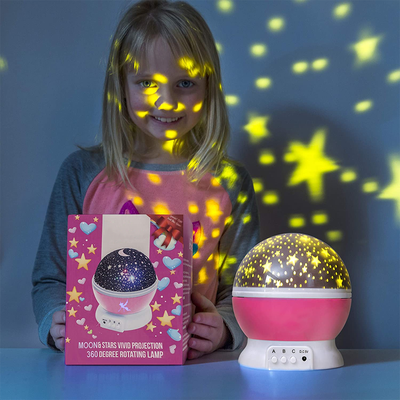
Playful Picks Space Projector Lamp Rotating Universe Light For Bedroom & Room Decor PinkTransform Your Space with the Ultimate Galaxy Space Projector LampElevate your home ambiance with our Space Projector Lamp, a stunning addition to any bedroom or living room. This rotating space lamp projects mesmerizing universe patterns, creating...34,97 $*Shipping: 0,00 $Secure redirect to the provider
-
Lush Decor Mysterious Universe Black/Navy Comforter SetYour little astronaut will love this outer space themed kids comforter set! Featuring an out-of-this-world print of planets, stars, and galaxies floating in the universe, it makes the perfect addition to any science obsessed kids' or tweens' bedroom.135,99 $*Shipping: 0,00 $Secure redirect to the provider
-
How does gravity affect our universe?
Gravity is a fundamental force that affects the motion of all objects in the universe. It is responsible for keeping planets in orbit around stars, stars in orbit around galaxies, and galaxies in clusters. Gravity also plays a crucial role in the formation and evolution of celestial bodies, from the collapse of gas clouds to form stars and planets, to the shaping of galaxies and the large-scale structure of the universe. Without gravity, the universe would be very different, with no organized structures and no stable orbits for celestial bodies. **
-
What exactly causes gravity in the universe?
Gravity is caused by the curvature of spacetime, which is a concept in Einstein's theory of general relativity. Mass and energy in the universe curve the fabric of spacetime, and this curvature is what we experience as the force of gravity. The more massive an object is, the more it curves spacetime, and the stronger its gravitational pull. This is why planets orbit around stars and why objects fall towards the Earth. **
-
Does gravity weaken as the universe expands?
As the universe expands, the overall density of matter and energy decreases, which can lead to a weakening of gravity on large scales. This is because the gravitational force between objects is directly related to their masses and the distance between them. As the universe expands, the average distance between galaxies and other massive objects increases, leading to a decrease in the overall gravitational pull between them. However, it's important to note that on smaller scales, such as within galaxies and solar systems, the effects of gravity are still strong and can even lead to the formation of new structures as the universe expands. **
-
How can one imagine the universe and gravity?
One can imagine the universe as a vast expanse filled with galaxies, stars, planets, and other celestial bodies. Gravity, on the other hand, can be visualized as a force that pulls objects towards each other due to their mass. This force is responsible for keeping planets in orbit around stars, moons around planets, and objects on Earth's surface. By understanding the relationship between the universe and gravity, one can appreciate the intricate balance that exists in the cosmos. **
Similar search terms for Universe
-
Playful Picks Space Projector Lamp Rotating Universe Light For Bedroom & Room Decor BlueTransform Your Space with the Ultimate Galaxy Space Projector LampElevate your home ambiance with our Space Projector Lamp, a stunning addition to any bedroom or living room. This rotating space lamp projects mesmerizing universe patterns, creating...34,97 $*Shipping: 0,00 $Secure redirect to the provider
-
Lush Decor Mysterious Universe Black/Navy Comforter SetYour little astronaut will love this outer space themed kids comforter set! Featuring an out-of-this-world print of planets, stars, and galaxies floating in the universe, it makes the perfect addition to any science obsessed kids' or tweens' bedroom.139,19 $*Shipping: 0,00 $Secure redirect to the provider
-
What is the topic of the MSA project in relation to astronomy, space exploration, and the universe?
The topic of the MSA project is the study of the Martian atmosphere and its potential for supporting life. This relates to astronomy, space exploration, and the universe as it involves understanding the conditions on Mars and the possibility of habitability beyond Earth. By studying the Martian atmosphere, scientists aim to gain insights into the potential for life on other planets and the broader search for extraterrestrial life in the universe. **
-
Is there a place in the universe without gravity?
Gravity is a fundamental force that exists throughout the universe, so there is no place in the universe where gravity does not exist. However, the strength of gravity can vary depending on the mass of objects in a particular area. In regions far away from massive objects like stars or planets, the gravitational force may be very weak, but it is still present. Overall, gravity is a universal force that affects all objects with mass. **
-
What is the difference between space, outer space, and universe?
Space refers to the physical dimensions in which objects exist and events occur. It is the three-dimensional expanse in which all material objects are located. Outer space, on the other hand, refers to the region beyond Earth's atmosphere, where there is a vacuum and very little matter. It is the area where stars, planets, and other celestial bodies are located. The universe, however, encompasses everything that exists, including all matter, energy, galaxies, stars, planets, and even the laws of physics that govern them. It is the entirety of space, time, matter, and energy. **
-
What is the difference between universe, space, and galaxy?
The universe refers to all of space, time, matter, and energy in existence. Space is the vast expanse that contains everything in the universe, including galaxies, stars, planets, and other celestial bodies. A galaxy is a large system of stars, gas, dust, and dark matter held together by gravity, typically containing billions of stars. In summary, the universe encompasses everything, space is the expanse where everything exists, and galaxies are individual systems within the universe. **
* All prices are inclusive of VAT and, if applicable, plus shipping costs. The offer information is based on the details provided by the respective shop and is updated through automated processes. Real-time updates do not occur, so deviations can occur in individual cases. ** Note: Parts of this content were created by AI.