Buy bezgrawitacji.eu ?
We are moving the project
bezgrawitacji.eu .
Are you interested in purchasing the domain
bezgrawitacji.eu ?
domain@kv-gmbh.de · 0541-91531010
Buy bezgrawitacji.eu ?
How can one filter wavelengths?
One can filter wavelengths by using materials that selectively absorb or transmit certain wavelengths of light. For example, colored filters can be used to absorb specific wavelengths of light while allowing others to pass through. Additionally, interference filters can be used to selectively transmit certain wavelengths by exploiting the wave nature of light. These filters are made by depositing thin layers of materials with specific optical properties onto a substrate. By carefully designing the thickness and composition of these layers, interference filters can be engineered to transmit only the desired wavelengths of light. **
How can wavelengths be filtered?
Wavelengths can be filtered using various optical filters such as bandpass filters, longpass filters, and shortpass filters. These filters work by selectively transmitting or blocking certain wavelengths of light while allowing others to pass through. Bandpass filters only allow a specific range of wavelengths to pass through, while longpass filters transmit longer wavelengths and shortpass filters transmit shorter wavelengths. By using these filters, specific wavelengths of light can be isolated or removed from a light source. **


Similar search terms for Wavelengths
Top-Angebote
Products related to Wavelengths:
-
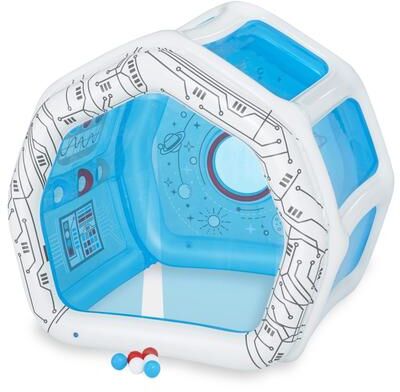
Bestway Space Station Exploration Kids Inflatable Playhouse - MultiDevelops: -Gross Motor Skills: stimulates your child's ability to get up and move around, gaining control of their bodies and movement - Imagination: encourages your child to dream of new ways to see the world around them - Confidence & Communication:…52,99 $*Shipping: 0,00 $Secure redirect to the provider
-
eclife 16.2ft Space Adventure Bounce House with Splash Pool Indoor/OutdoorBlast off into hours of active, screen‑free play with this space‑themed inflatable bounce house and water slide combo. Designed to spark young imaginations, its rocket, satellite, and spacecraft details turn any backyard into a mission control for fun.492,49 $*Shipping: 0,00 $Secure redirect to the provider
-
Multisell Products Hub High Tech Construction Bricks Set, New Creative Technology Space Station Transparent Globe, Toy Gifts For Children High Tech Construction Bricks Set, New Creative Technology Space Station Transparent Globe, Toy Gifts For ChildrenInnovative Building Fun for Kids: Bring the world of construction and creativity together with the New Creative Technology Space Station Transparent Globe Building Blocks. This hightech, engaging toy set is designed for young minds to explore the...179,97 $*Shipping: 0,00 $Secure redirect to the provider
-
Macmillan Business How Big Things Get Done: The Surprising Factors Behind Every Successful Project, from Home Renovations to Space ExplorationHow Big Things Get Done: The Surprising Factors Behind Every Successful Project, from Home Renovations to Space Exploration Nothing is more inspiring than a big vision that becomes a triumphant new reality. Think of how Apple’s iPod went from a project with a single employee to an enormously successful product launch in eleven months. But such successes are the exception. Consider how London’s Crossrail project delivered five years late and billions over budget. More modest endeavours, whether launching a small business, organizing a conference, or just finishing a work project on time, also commonly fail. Why? Understanding what distinguishes the triumphs from the failures has been the life’s work of Oxford professor Bent Flyvbjerg. In How Big Things Get Done, he identifies the errors that lead projects to fail, and the research-based principles that will make yours succeed: Understand your odds. If you don’t know them, you won’t win. Plan slow, act fast. Getting to the action quick feels right. But it’s wrong. Think right to left. Start with your goal, then identify the steps to get there. Find your Lego. Big is best built from small. Master the unknown unknowns. Most think they can’t, so they fail. Flyvbjerg shows how you can. Full of vivid examples ranging from the building of the Sydney Opera House to the making of the latest Pixar blockbusters, How Big Things Get Done reveals how to get any ambitious project done – on time and on budget.2,99 £*Shipping: 1,99 £Secure redirect to the provider



-
Why do colors have different wavelengths?
Colors have different wavelengths because they are a result of different frequencies of light. The wavelength of light determines its color, with shorter wavelengths corresponding to colors like blue and violet, and longer wavelengths corresponding to colors like red and orange. When light interacts with an object, certain wavelengths are absorbed and others are reflected, which is what we perceive as color. Therefore, the different wavelengths of light are responsible for the variety of colors we see in the world around us. **
-
Why are the rings of an electron diffraction tube larger at higher wavelengths than at lower wavelengths?
The rings of an electron diffraction tube are larger at higher wavelengths than at lower wavelengths because the wavelength of the electrons is inversely proportional to their momentum. This means that as the wavelength increases, the momentum of the electrons decreases. With lower momentum, the electrons are less able to penetrate the atomic structure of the material being studied, resulting in larger diffraction rings. Conversely, at lower wavelengths, the higher momentum of the electrons allows them to penetrate the atomic structure more effectively, resulting in smaller diffraction rings. **
-
What is the reflection of adjacent wavelengths?
The reflection of adjacent wavelengths refers to the phenomenon where light waves of different wavelengths are reflected off a surface. When light waves with adjacent wavelengths, such as red and orange, hit a surface, they may be reflected at different angles or with different intensities. This can result in the separation of colors, as seen in a rainbow or in the iridescence of certain materials. The reflection of adjacent wavelengths is a key factor in the perception of color and the behavior of light. **
-
How do you calculate wavelengths in water?
To calculate the wavelength of a wave in water, you can use the formula: wavelength = speed of wave / frequency of wave. The speed of the wave in water can be calculated using the formula: speed = frequency * wavelength. The frequency of the wave can be determined by the source of the wave, and the wavelength can be measured by observing the distance between two consecutive wave crests or troughs. By using these formulas, you can calculate the wavelength of a wave in water. **


How can I play Life is Strange: Wavelengths?
To play Life is Strange: Wavelengths, you will need to have the base game Life is Strange: True Colors installed on your gaming platform. Wavelengths is a DLC (downloadable content) episode that focuses on the character Steph Gingrich. Once you have the base game, you can purchase and download the Wavelengths DLC from the respective digital store for your platform, such as Steam, PlayStation Store, or Xbox Store. After downloading the DLC, you can access and play Wavelengths from within the main menu of Life is Strange: True Colors. **
What are the wavelengths of the Lyman series?
The Lyman series consists of ultraviolet spectral lines in the hydrogen atom. The wavelengths of the Lyman series range from approximately 91 nm to 122 nm. These wavelengths correspond to transitions of electrons in hydrogen atoms from higher energy levels to the ground state. The Lyman series is named after its discoverer, Theodore Lyman. **
Top-Angebote
Products related to Wavelengths:
-
Retailers Go Blue & Red Light Therapy Device 5 Wavelengths For Acne, Pain Relief & Skin Rejuvenation Blue & Red Light Therapy Device 5 Wavelengths For Acne, Pain Relief & Skin RejuvenationTransform Your Skin & Soothe Aches with Advanced Light TherapyExperience the power of professionalgrade Blue & Red Light Therapy Device with 5 Wavelengths, designed to enhance skin health, reduce acne, and relieve muscle pain. Harnessing Infrared...59,97 $*Shipping: 0,00 $Secure redirect to the provider
-
Uplift Essentials Blue And Red Light Therapy Device With 5 Wavelengths Near Infrared For Pain Relief And Skin Health Blue And Red Light Therapy Device With 5 Wavelengths Near Infrared For Pain Relief And Skin HealthExperience advanced red and blue light therapy at home with this 5wavelength device designed to support pain relief, improve skin clarity, and enhance overall wellness. Combining visible and invisible light, it penetrates deeply into the skin and...106,97 $*Shipping: 0,00 $Secure redirect to the provider
-
Bestway Space Station Exploration Kids Inflatable Playhouse - MultiDevelops: -Gross Motor Skills: stimulates your child's ability to get up and move around, gaining control of their bodies and movement - Imagination: encourages your child to dream of new ways to see the world around them - Confidence & Communication:…52,99 $*Shipping: 0,00 $Secure redirect to the provider
-
eclife 16.2ft Space Adventure Bounce House with Splash Pool Indoor/OutdoorBlast off into hours of active, screen‑free play with this space‑themed inflatable bounce house and water slide combo. Designed to spark young imaginations, its rocket, satellite, and spacecraft details turn any backyard into a mission control for fun.492,49 $*Shipping: 0,00 $Secure redirect to the provider
-
How can one filter wavelengths?
One can filter wavelengths by using materials that selectively absorb or transmit certain wavelengths of light. For example, colored filters can be used to absorb specific wavelengths of light while allowing others to pass through. Additionally, interference filters can be used to selectively transmit certain wavelengths by exploiting the wave nature of light. These filters are made by depositing thin layers of materials with specific optical properties onto a substrate. By carefully designing the thickness and composition of these layers, interference filters can be engineered to transmit only the desired wavelengths of light. **
-
How can wavelengths be filtered?
Wavelengths can be filtered using various optical filters such as bandpass filters, longpass filters, and shortpass filters. These filters work by selectively transmitting or blocking certain wavelengths of light while allowing others to pass through. Bandpass filters only allow a specific range of wavelengths to pass through, while longpass filters transmit longer wavelengths and shortpass filters transmit shorter wavelengths. By using these filters, specific wavelengths of light can be isolated or removed from a light source. **
-
Why do colors have different wavelengths?
Colors have different wavelengths because they are a result of different frequencies of light. The wavelength of light determines its color, with shorter wavelengths corresponding to colors like blue and violet, and longer wavelengths corresponding to colors like red and orange. When light interacts with an object, certain wavelengths are absorbed and others are reflected, which is what we perceive as color. Therefore, the different wavelengths of light are responsible for the variety of colors we see in the world around us. **
-
Why are the rings of an electron diffraction tube larger at higher wavelengths than at lower wavelengths?
The rings of an electron diffraction tube are larger at higher wavelengths than at lower wavelengths because the wavelength of the electrons is inversely proportional to their momentum. This means that as the wavelength increases, the momentum of the electrons decreases. With lower momentum, the electrons are less able to penetrate the atomic structure of the material being studied, resulting in larger diffraction rings. Conversely, at lower wavelengths, the higher momentum of the electrons allows them to penetrate the atomic structure more effectively, resulting in smaller diffraction rings. **
Similar search terms for Wavelengths
-
Multisell Products Hub High Tech Construction Bricks Set, New Creative Technology Space Station Transparent Globe, Toy Gifts For Children High Tech Construction Bricks Set, New Creative Technology Space Station Transparent Globe, Toy Gifts For ChildrenInnovative Building Fun for Kids: Bring the world of construction and creativity together with the New Creative Technology Space Station Transparent Globe Building Blocks. This hightech, engaging toy set is designed for young minds to explore the...179,97 $*Shipping: 0,00 $Secure redirect to the provider
-
Macmillan Business How Big Things Get Done: The Surprising Factors Behind Every Successful Project, from Home Renovations to Space ExplorationHow Big Things Get Done: The Surprising Factors Behind Every Successful Project, from Home Renovations to Space Exploration Nothing is more inspiring than a big vision that becomes a triumphant new reality. Think of how Apple’s iPod went from a project with a single employee to an enormously successful product launch in eleven months. But such successes are the exception. Consider how London’s Crossrail project delivered five years late and billions over budget. More modest endeavours, whether launching a small business, organizing a conference, or just finishing a work project on time, also commonly fail. Why? Understanding what distinguishes the triumphs from the failures has been the life’s work of Oxford professor Bent Flyvbjerg. In How Big Things Get Done, he identifies the errors that lead projects to fail, and the research-based principles that will make yours succeed: Understand your odds. If you don’t know them, you won’t win. Plan slow, act fast. Getting to the action quick feels right. But it’s wrong. Think right to left. Start with your goal, then identify the steps to get there. Find your Lego. Big is best built from small. Master the unknown unknowns. Most think they can’t, so they fail. Flyvbjerg shows how you can. Full of vivid examples ranging from the building of the Sydney Opera House to the making of the latest Pixar blockbusters, How Big Things Get Done reveals how to get any ambitious project done – on time and on budget.2,99 £*Shipping: 1,99 £Secure redirect to the provider
-
HARPERCOLLINS Creative Confidence by Tom & David Kelley – Unleashing Your Creative Potential & Innovation MindsetA powerful and inspiring book from the founders of IDEO, the award-winning design firm, on unleashing the creativity that lies within each and every one of us. Too often, companies and individuals assume that creativity and innovation are the domain of the ‘creative types’. But two of the foremost experts in innovation, design and creativity on the planet show us that each and every one of us is creative. In an entertaining and inspiring narrative that draws on countless stories from their work at IDEO, and with many of the world's top companies and design firms, David and Tom Kelley identify the principles and strategies that will allow us to tap into our creative potential in our work lives, and in our personal lives, allow us to think outside the box in terms of how we approach and solve problems. ‘Creative Confidence’ is a book that will help each of us be more productive and successful in our lives and in our careers.4,95 £*Shipping: 1,99 £Secure redirect to the provider
-
JoyToys Interactive Dancing Duck Toy With Music, Lights & Space Adventure For Babies And Toddlers pandaEnjoy endless smiles and early learning with this musical baby toy that keeps little ones happily engaged through movement, lights, and cheerful sounds. Designed for babies and toddlers, this adorable duck features a fun spaceinspired design that...55,97 $*Shipping: 0,00 $Secure redirect to the provider
-
What is the reflection of adjacent wavelengths?
The reflection of adjacent wavelengths refers to the phenomenon where light waves of different wavelengths are reflected off a surface. When light waves with adjacent wavelengths, such as red and orange, hit a surface, they may be reflected at different angles or with different intensities. This can result in the separation of colors, as seen in a rainbow or in the iridescence of certain materials. The reflection of adjacent wavelengths is a key factor in the perception of color and the behavior of light. **
-
How do you calculate wavelengths in water?
To calculate the wavelength of a wave in water, you can use the formula: wavelength = speed of wave / frequency of wave. The speed of the wave in water can be calculated using the formula: speed = frequency * wavelength. The frequency of the wave can be determined by the source of the wave, and the wavelength can be measured by observing the distance between two consecutive wave crests or troughs. By using these formulas, you can calculate the wavelength of a wave in water. **
-
How can I play Life is Strange: Wavelengths?
To play Life is Strange: Wavelengths, you will need to have the base game Life is Strange: True Colors installed on your gaming platform. Wavelengths is a DLC (downloadable content) episode that focuses on the character Steph Gingrich. Once you have the base game, you can purchase and download the Wavelengths DLC from the respective digital store for your platform, such as Steam, PlayStation Store, or Xbox Store. After downloading the DLC, you can access and play Wavelengths from within the main menu of Life is Strange: True Colors. **
-
What are the wavelengths of the Lyman series?
The Lyman series consists of ultraviolet spectral lines in the hydrogen atom. The wavelengths of the Lyman series range from approximately 91 nm to 122 nm. These wavelengths correspond to transitions of electrons in hydrogen atoms from higher energy levels to the ground state. The Lyman series is named after its discoverer, Theodore Lyman. **
* All prices are inclusive of VAT and, if applicable, plus shipping costs. The offer information is based on the details provided by the respective shop and is updated through automated processes. Real-time updates do not occur, so deviations can occur in individual cases. ** Note: Parts of this content were created by AI.